
Vascular surgery medical billing, from endovascular repair to vein ablation
Certified coders, prior authorization and denial follow-up for vascular surgeons who bill revascularization, aneurysm repair, carotid and dialysis access work, and the visits around them.
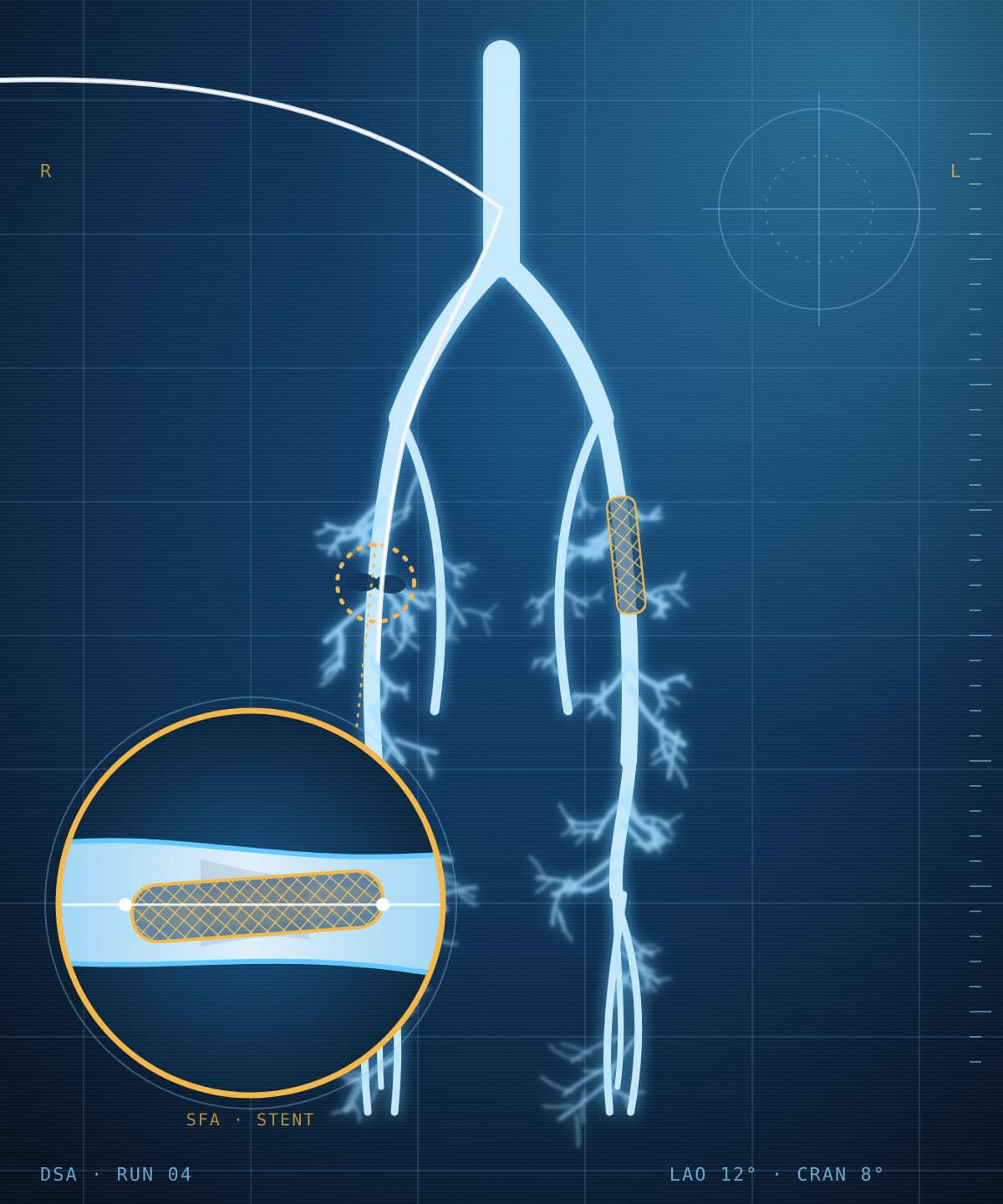
What does a vascular surgery billing company do?
A vascular surgery billing company codes arterial, venous and dialysis access procedures and follows each claim to payment. DrCareMSO coders build lower extremity revascularization claims from the 2026 territory codes, keep imaging and closure off the claim when they are bundled, add the access and extension lines that the operative note supports, check vein ablation and carotid stenting against coverage rules, and track every global period.
- Updated
Where vascular surgery claims lose money
A vascular surgeon bills open operations, catheter based repairs and vein procedures, and each family has its own bundling and coverage rules. These are the four places we see revenue leave a practice.
The 2026 revascularization code change
The leg revascularization code set was replaced on January 1, 2026, and old codes left in a charge master are rejected. We rebuilt our edits for the new structure and check each note for what it must say to be coded correctly.
Aortic repair with many moving parts
Endograft cases carry the graft, the access and the extras, and each is lost when the note does not describe it. We capture every component so the case is paid in full and the global period is tracked.
Imaging and access bundled into the procedure
Access, imaging and closure are usually included in the procedure, and a separate angiogram is paid only when the facts support it. We keep bundled work off the claim and flag the services that stand alone.
Vein and dialysis work paid on proof
Vein ablation is covered only with the right records behind it, and dialysis circuit work is billed service by service. We check the proof before the case is scheduled and build each service from the procedure note.
What we bill in every vascular surgery claim
Our coders work from the full range of vascular procedures, including the 2026 lower extremity revascularization changes. Each family below has its own global period and payer rules, and each rule is checked before a claim goes out.
Lower extremity revascularization (2026)
Angioplasty, stent, atherectomy and lithotripsy by territory, for stenosis and occlusion.
Iliac angioplasty and stent, straightforward and complex, initial and additional vessel
Femoral and popliteal angioplasty, stent, atherectomy, and stent with atherectomy
Tibial and peroneal angioplasty, stent, atherectomy, and stent with atherectomy
Inframalleolar angioplasty, straightforward and complex, initial and additional vessel
Aortic and iliac aneurysm repair
Endovascular, fenestrated, thoracic and open repair of aneurysms.
Endovascular repair of the infrarenal aorta or iliac artery by graft type, unruptured and ruptured
Fenestrated and branched endograft repair, by the visceral vessels involved
Thoracic endovascular aortic repair (TEVAR) and its extensions
Open abdominal aortic and iliac aneurysm repair, ruptured and unruptured
Carotid and cerebrovascular
Endarterectomy, stenting and the duplex that supports both.
Carotid endarterectomy, with or without a patch graft
Carotid stent placement, with and without distal embolic protection
Stent placement in the intrathoracic common carotid or innominate artery
Carotid duplex, bilateral and unilateral or limited
Open bypass, endarterectomy and amputation
Surgical revascularization of the legs, with conduit and harvest lines.
Femoral to popliteal bypass, with vein and with other than vein
Femoral to tibial or peroneal bypass, with vein and with other than vein
Aortobifemoral bypass graft, other than vein
Endarterectomy of the common femoral, deep femoral, and femoral, popliteal and tibioperoneal arteries
Embolectomy by leg incision, and thrombectomy of a bypass graft with and without revision
Dialysis access and central venous
Creating, repairing and keeping open the access that dialysis depends on.
Arteriovenous fistula, direct and with vein transposition
Fistula with an autogenous graft or a nonautogenous graft
Percutaneous creation of an arteriovenous fistula
Dialysis circuit: diagnostic angiography, angioplasty, stent and thrombectomy
Tunneled central venous catheter placement and removal
Varicose veins and venous disease
Ablation, sclerotherapy, phlebectomy, venous stenting and filters.
Radiofrequency ablation, first vein and each additional vein in the same extremity
Laser ablation, first vein and each additional vein
Chemical adhesive ablation, first vein and each additional vein
Mechanochemical ablation, first vein and each additional vein
Foam and liquid sclerotherapy of truncal and extremity veins
Noninvasive testing and screening
The studies that find peripheral artery disease and aneurysms and track them.
Ankle brachial index and physiologic studies of the extremities, limited, complete and with exercise or provocative maneuvers
Arterial duplex of the lower extremities, bilateral and unilateral or limited
Duplex of the aorta, vena cava, iliac vessels or bypass grafts, complete and unilateral or limited
Ultrasound screening for abdominal aortic aneurysm (Medicare)
Supervised exercise therapy for claudication
Pick the vessel and see how the 2026 claim is built
The 2026 revascularization rules follow the territory, the treatment and the lesion. Choose each one to see the first vessel line, the add on line and the rule for that territory.
Treatment in this territory
Femoral and popliteal, stenosis
First vessel: balloon angioplasty of a straightforward lesion
Two vessels count in this territory, so one add on line can follow the first vessel on one limb. A stent or atherectomy includes the angioplasty, and when a vessel gets more than one treatment the highest level treatment decides the line. Intravascular lithotripsy is reported as an add on, up to twice.
- The completed treatment decides the claim, not the planned one
- The most complex lesion treated in a vessel decides its level
- Access, catheter placement, imaging and closure are included in every line
- Add on lines are reported only with a first vessel line from the same territory
Territories and treatment levels follow the 2026 AMA revascularization coding changes and the 2026 SCAI and SVS coding guides. Payer policies differ, and we confirm each payer's rule before the claim is sent.
How we run vascular surgery RCM
A five step cycle that starts before the case is booked and keeps going until the claim is paid. Each step ends with something you can check.
- 1
Verify coverage and approval rules
We verify eligibility and look up the plan's rule for the exact procedure and site of service, then request approval for planned work such as revascularization for claudication, carotid stenting and vein ablation before the date is set.
What you get: A coverage and approval note on the case before the procedure.
- 2
Capture the case at the source
We work from the operative note, the angiogram or duplex report and the implant log, so the territory, each vessel treated, the lesion type, the access route and the devices are on the charge.
What you get: A complete charge with vessels, lesions and devices.
- 3
Code to the 2026 rules
A certified coder builds the claim by territory and vessel, decides stenosis or occlusion from the note, adds access, extension and vein harvest lines where they are documented, and flags staged work, a distinct diagnostic study, an unplanned return and the side treated.
What you get: A clean charge, and a dated global period on file.
- 4
Apply the bundling edits
We check each line against the NCCI edits for diagnostic angiography, ultrasound guidance, closure and duplex imaging, so bundled services are not billed and separate ones are not lost.
What you get: A charge that matches the edit tables.
- 5
Submit, work denials and fix the cause
Claims go out electronically, payments are posted against the expected amount, and each denial is corrected or appealed, then grouped by cause every month.
What you get: A monthly denial report with the top causes and what changed.
Why vascular surgery practices choose DrCareMSO
You run the practice and the cases. We run the claims, and we answer for the result.
Certified coders for vascular surgery claims
Your claims are coded by people trained on your specialty, not a general pool.
Approvals before the case is scheduled
Coverage and authorization are checked up front, so surgery and procedures are not held up or denied later.
Every denial worked to payment
We correct, appeal and follow up on each denial, then fix the cause so it does not come back.
A monthly report in plain language
You see what was billed, what was paid and why anything was denied, with no digging through portals.
One vascular group, three leaks, fixed
Scenario: a vascular surgery group losing revenue to the 2026 code change, bundled imaging and thin vein records. This is how the work changed.
Before
- Revascularization claims went out with deleted 2026 codes carried over from the old charge master
- Diagnostic angiography was billed with every intervention and denied as bundled
- Vein ablation claims were denied because the duplex and the conservative care log were not in the record
After
- Charge entry uses the territory codes, and the note is checked for stenosis or occlusion before coding
- A separate diagnostic study is billed only with its reason and the right flag
- Vein cases are checked for the duplex, the symptoms and the care log before they are scheduled
Vascular surgery billing questions
Straight answers on the 2026 revascularization codes, EVAR, carotid stenting, vein ablation, dialysis access, modifiers, global periods and starting out.
38 of 38 questions
Schedule Your Free Demo
Our team will get in touch with you within 12 hours
Request Your Demo